THE VAN TABLE · SERIES 1 · EPISODE 5
Can You Really Buy a House in Portugal for €20,000?
Can you really buy a house in Portugal for €20,000 or less? Yes. But finding a cheap property is only the beginning. David and Alison talk about the houses, ruins, land and mountain they have actually looked at, bought and lived with in rural Portugal.
Recorded: 16 August 2026
Location: Scottish Highlands
Duration: 49 minutes
Featuring: David Stanley & Alison
Topics: Portugal property · Cheap houses · Rural land · Ruins · Buying abroad · Renovation · Off-grid living · Water · Solar · Property costs · Remote living
Listen on Spotify
About this episode
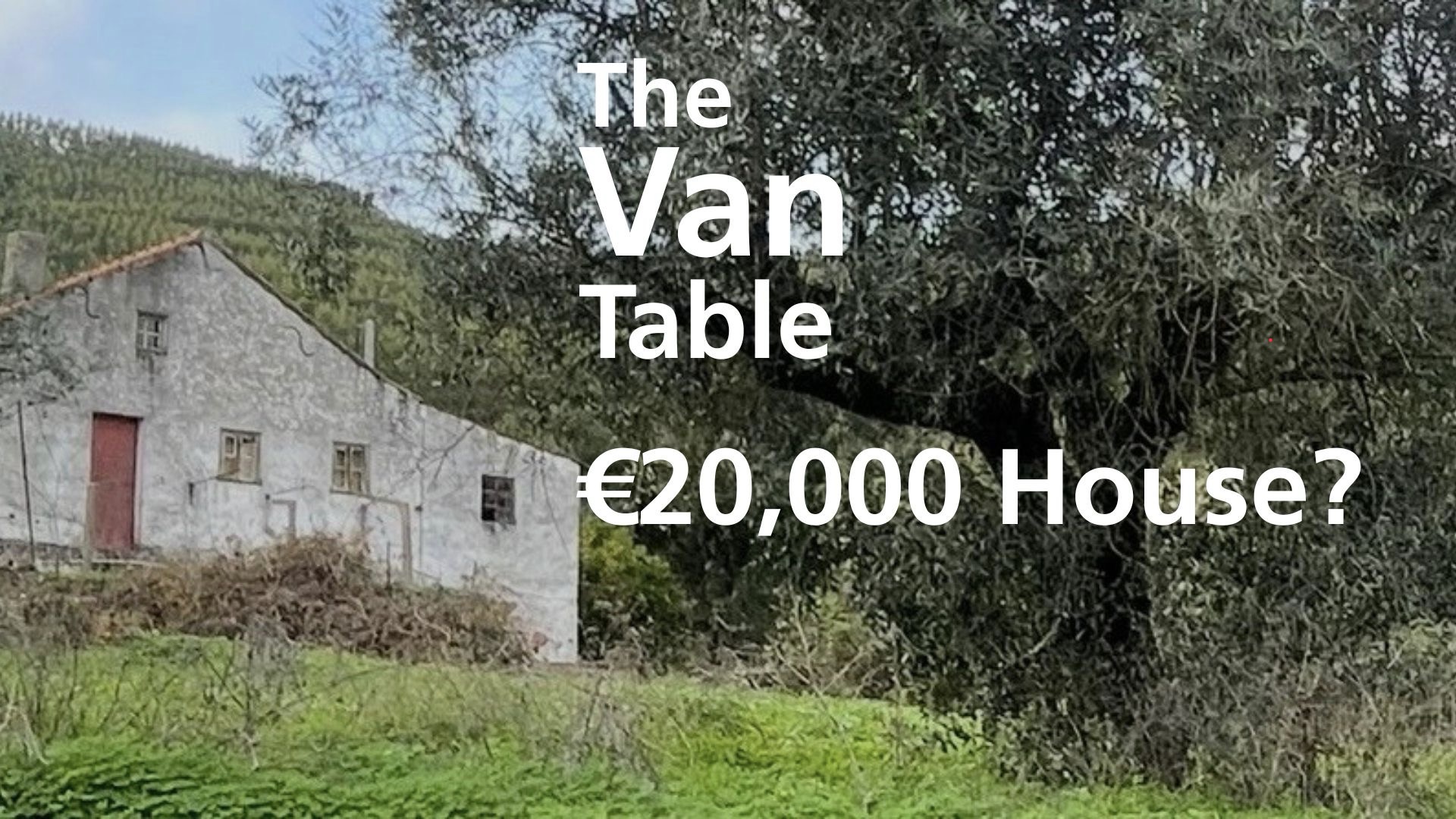
Can you really buy a house in Portugal for €20,000? David and Alison have seen plenty of evidence that you can, including an €18,000 shop with three floors above it, a €12,000 ruin with land and village houses changing hands for surprisingly small amounts of money.
But cheap property is only part of the story. Once you have the keys you still need to think about access, water, electricity, renovation, planning, builders, materials and the practical reality of living somewhere a forgotten packet of screws can mean a forty-minute drive.
They talk about how they found their own mountain, what they would do differently knowing what they know now, buying through Melanie at Home Key Portugal, rural versus urban property, NIF numbers, renovation costs and the benefits and drawbacks of living far away from the usual conveniences.
And after everything they have learned, would they still buy the mountain again?
Absolutely.
Do a bit of research like we didn't.
Around the table
- Can you really buy a Portuguese house for €20,000?
- The €18,000 shop with three floors above it
- An 18-room village house for around €20,000
- The €12,000 ruin we nearly bought
- Why cheap properties often appear after you get to know local people
- Where to look for cheaper property in Portugal
- Why inland Portugal can be completely different from the Algarve
- Buying property as a foreigner
- NIF numbers and our own buying experience
- House versus ruin versus rural land
- What to check before buying rural property
- What our property purchase cost us
- Can a €10,000 renovation property really be a bargain?
- Living without mains water or electricity
- The reality of getting supplies in rural Portugal
- Amazon deliveries that may or may not arrive
- Fire season, water and solar power
- Would we buy the mountain again?
From this episode
Links & things mentioned
Listen or watch
Notes from Dave
This episode is based on our own experience of looking for, buying and owning property in Portugal.
It is not legal, tax, planning or financial advice. Rules, taxes, permissions and property classifications can vary by property, municipality and individual circumstances. Always check current requirements with the relevant Portuguese authorities and appropriately qualified professionals before buying property or carrying out work.
Where we talk about prices, taxes, renovation rules and costs, we are describing our own experience and recollection rather than giving instructions about what somebody else should expect to pay or be allowed to do.
Read the full transcript
00:00 — David:
Welcome to Episode 5 of The Van Table.
Alison's wondering whether her hair looks crazy or nuts,
and I said it just looks crazy anyway.
She's spent an hour doing my hair and beard as well.
She plaited it, dreadlocked it, knitted it, whatever we're calling it.
Alison's crocheting, which is what she does whenever we're driving anywhere in the van. This time it's a dinosaur.
00:46 — David:
We're talking about property in Portugal today.
You got me to do it. You forced me at gunpoint.
I said look for somewhere in Italy.
So what did you do? Portugal.
01:11 — David:
Can you buy a house in Portugal for €20,000 or less?
What do you think, Al? Can you, or should you?
Alison:
Yeah, you can. Definitely.
01:39 — David:
Well that's the end of that topic then.
Yes you can.
We looked at one in the middle of town with a shop downstairs. That was €18,000.
You could get a shop around thirty metres long, good frontage and three floors above it. It needed work at the back where there was a leak, but it was on the market around €18,000.
02:34 — David:
In the village where we live there are other properties
people have offered us for around €20,000.
Once we'd bought somewhere, everybody seemed to start saying, "Come and look at this house."
We should probably have pretended we'd already bought somewhere, moved into village life and waited for everybody to offer us property.
03:04 — David:
We also bought a house.
Apparently I was suckered by the purple bathroom suite.
Alison:
I assumed you were making good decisions out there.
David:
It's a good house.
It's big and has a lot of potential.
03:34 — David:
There's another house in the village somebody asked me to look around.
It has an old bread oven said to be around two hundred years old, eighteen rooms and is generally in good condition. One parquet floor downstairs has started lifting because of damp.
That property was around €20,000.
04:25 — David:
We originally wanted to buy a house in Zimbreira after buying the mountain.
There was a ruin nearby with an orange tree and quite a lot of flat land behind it. It was on the market for around €12,000.
We didn't need more land because we'd just bought the mountain. What we really wanted was an urban property with an address.
While we were emailing about it somebody else bought it. We later met them. They're very nice, unfortunately.
05:22 — David:
Everybody around there has been really friendly.
People come and talk to you, bring you food,
get to know you and occasionally offer you their house.
05:51 — David:
So yes, you can buy a cheap house.
But don't rush.
Alison:
Portugal isn't rushing, so you don't need to rush either.
David:
It took us around three or four weeks to buy the mountain
and about two weeks to buy the house.
I don't mean the legal process necessarily. I mean don't rush the decision. There are lots of options.
06:38 — David:
So where do you find cheap property in Portugal?
Alison:
You're asking the wrong person.
We found the cheap property after we bought ours.
07:05 — David:
That's probably true.
Get to know people locally.
The mountain was a big investment for us and we don't regret it. The second house is different.
It's big, the garden is nice and I'm not saying it wasn't worth what we paid, but we probably didn't need to spend that much for what we actually needed.
07:34 — David:
After we'd bought it everybody suddenly started telling us
about other houses for sale.
Fernando showed me a house his brother bought. It had been advertised at around €30,000 and he bought it for €10,000.
He's done a fantastic job renovating it.
08:04 — David:
Our village house has sometimes distracted us from the mountain,
but it also gave us somewhere to stay when the weather was terrible.
08:32 — David:
We had storms and rain so bad that staying on the mountain
would have been extremely difficult.
Roofs were blowing off caravans and access became difficult.
09:00 — David:
The rain was biblical.
Around fifty-five trees came down across our route
and we had to climb across them to get belongings out.
09:28 — David:
Knowing what I know now, this is what I'd do differently.
We flew into Faro, met estate agents and started looking at property. Some didn't really understand what we wanted.
The best experience we had was eventually with Melanie, who we bought the mountain through.
09:58 — David:
Melanie understood much more clearly what we were looking for.
She showed us the mountain and I immediately loved it. Alison wanted to keep looking.
10:27 — David:
Another property we saw had more finished buildings,
but it was much smaller and didn't have the trees or shade we wanted.
10:57 — David:
The building on our mountain is essentially a concrete rural building,
rather than a conventional house.
Its legal classification is rural rather than urban. What that means for habitation, alteration and future use is something anybody buying similar property needs to check with the relevant authorities for their particular property.
11:26 — David:
If I were starting again, I'd pick an area I liked,
rent a car and drive around it.
Look for signs saying "VENDE" with phone numbers. Ring them or use WhatsApp. WhatsApp is widely used and it makes translating messages much easier if your Portuguese isn't great.
12:24 — David:
Since we've been there we've heard about incredibly cheap properties.
The woman we bought our village house from has also tried to sell us another part of the property for around €8,000.
We've been offered it for less since then, but for us it would mostly be storage and we don't really need it.
12:54 — David:
Rural areas can have heaps of properties for sale
that never necessarily appear in the places you'd expect.
13:21 — David:
Estate agents then pick some of them up as well.
Our second house was advertised around €60,000 and we paid around €40,000. At the time I thought we'd got an incredible bargain.
13:49 — David:
The purchase was completed through the appropriate notarial process.
Property ownership can become more complicated where land has been inherited by several family members, because ownership and signatures need sorting correctly.
14:15 — David:
One of the funny things about our village house
is that local people knew more about its history than the seller did.
We discovered stories about the orange trees, olive trees and grapevines from neighbours.
14:41 — David:
Where should you look in Portugal if you want cheap land or property?
Not necessarily the main tourist areas.
If you want to be right in the tourist scene, you're generally going to pay for that location.
15:11 — David:
The Algarve is stunning,
but some property prices can be comparable with expensive areas
elsewhere in Europe.
15:41 — David:
You're paying for location.
We spent time around Alvor and it's beautiful, with beaches, restaurants and everything you'd expect from a popular coastal area.
16:37 — David:
As you move inland, though,
prices can be dramatically different.
Home Key Portugal is Melanie, who we bought the mountain through. We'll link her below.
There are also other rural estate agents and larger companies such as RE/MAX.
17:43 — David:
We've previously shared Portuguese properties on Facebook
and those posts generated a lot of questions:
how do I buy this, where is it and how does it work?
18:09 — David:
Can foreigners actually buy property or land in Portugal?
We did.
For our purchases we needed Portuguese tax identification numbers, usually called NIF numbers.
18:39 — David:
We arranged our NIF numbers while we were still in the UK
through an agency.
18:52 — David:
When buying we had to provide identification,
proof relating to the money and the documentation required
for the transaction.
19:21 — David:
The documents were reviewed during the purchase process
and translated or explained where required.
Melanie helped us understand what was happening during our purchase.
19:51 — David:
Older Portuguese houses can be fascinating.
They're often built very differently from modern British houses, particularly around keeping cool in summer.
20:20 — David:
During extremely wet weather our village house became very damp.
We had an unusually wet period while we were there, and the difference between summer and winter conditions can be huge.
20:50 — David:
We briefly derail into discussing the eclipse in Scotland
and my disappointment that it wasn't pitch black
with zombies and aliens landing.
21:45 — David:
What's the difference between buying a house,
a ruin and land in Portugal?
This is where you absolutely need to check the legal classification of the particular property.
22:13 — David:
When I spoke to our local council about our own property,
I was given guidance about repairs and alterations
relating specifically to what we own.
Do not assume the same rules apply to every building, ruin or plot of land in Portugal.
22:43 — David:
Ruins, habitation status, agricultural buildings
and rebuilding rights can all be different.
Check before buying.
23:13 — David:
Local people have occasionally given us the classic advice:
"Just build it and pay the fine."
That's not how we approach things.
24:09 — David:
For larger alterations you may hear Portuguese people
refer to submitting a "project".
24:15 — David:
We've taken local advice about what may be possible
with the mountain building and our long-term retreat plans.
Again, those conversations relate to our particular property.
25:12 — David:
The village house is another thing entirely,
and the kitchen probably needs plenty of work when we get back.
26:11 — David:
What should you check before buying rural land?
First, make sure the whole thing is genuine.
26:27 — David:
We were incredibly wary of scams
because we'd read so many horror stories online.
On the morning of our purchase we were still wondering whether we'd completely lost our minds.
26:56 — David:
Luckily Melanie was fantastic.
If you're looking for property, our personal experience with Melanie at Home Key Portugal was extremely good.
Other things to check include water, access and boundaries.
27:26 — David:
Our mountain has some bizarre boundaries.
They were shown to us on the ground and some were marked by rocks hidden in vegetation.
I plotted the route as we walked around.
27:55 — David:
The boundary zigzags up and across the mountain
in all sorts of strange directions.
28:25 — David:
We're recording late at night because four children
make daytime podcast recording interesting.
We're currently in a static caravan in Scotland that has very kindly been provided while I'm working here.
28:55 — David:
What does buying property in Portugal actually cost
on top of the advertised price?
We paid purchase costs, taxes and fees, but we're working from memory here.
29:19 — Alison:
I don't think all of the amount you're remembering was tax.
Some of it was fees.
29:47 — David:
Our transaction was ultimately straightforward
and we even received some money back after an overpayment was corrected.
30:17 — David:
The important note in front of me literally says:
don't give tax advice from memory.
So don't use our numbers to calculate your purchase. Check current Portuguese taxes and fees properly.
30:46 — David:
One thing that surprised us was how low
the annual property tax on our particular property was.
We initially thought the bill was monthly. It wasn't.
31:16 — David:
Is the €10,000 house actually a bargain after renovation?
Sometimes, absolutely.
Fernando's family property is one example. If you're practical and can do work yourself, the numbers can become very interesting.
31:39 — David:
Another couple we know bought their property
for around €8,000.
32:09 — David:
After planning and building work,
they have created a beautiful modern space
with solar power and large windows looking across the mountains.
32:39 — David:
They bought at roughly the same time we bought our mountain
and within a couple of years had transformed it.
33:08 — David:
There are still several properties around that village
that have been offered for relatively modest prices.
33:39 — David:
If people want more information about the places
we've personally encountered,
they can contact us through the website.
34:06 — David:
What is it actually like living remotely once you've bought it?
Fantastic.
On the mountain we don't currently have mains running water or electricity.
We use solar and have access to spring water in the area.
34:35 — David:
Battery storage used to be one of the expensive parts
of building an off-grid solar system,
although prices and technology keep changing.
35:19 — David:
At the village house we're connected to mains electricity.
Even when using heating, cooking, Starlink and everything needed for the family, our own bills have generally been manageable.
36:04 — David:
On the mountain itself we generate solar power
and collect water from local spring sources.
We'll show more of that on the website and in future episodes.
36:32 — David:
But this is the part nobody thinks about when buying somewhere remote.
You completely restore a house until you discover you've forgotten the screws.
37:00 — David:
Where we live, Amazon isn't necessarily next-day convenience.
We order through Amazon Spain and sometimes things arrive perfectly. Sometimes they don't.
37:30 — David:
Our house isn't particularly difficult to find.
There are only a handful of properties on the road.
Somehow deliveries can still become an adventure.
38:27 — David:
If you're renovating somewhere remote,
find out where your building supplies actually come from
before you need them.
For us, even basic supplies can mean a twenty-five-minute drive, and for a better selection we may be heading towards Abrantes or Castelo Branco.
38:57 — David:
At this point the conversation becomes temporarily distracted
by the Chinese buffet and Portuguese puddings.
39:26 — David:
We then argue about the Chinese takeaway
Alison says I promised to bring home.
39:56 — David:
Anyway, back to screws.
Sometimes one shop has what you need. Sometimes you end up driving somewhere else.
40:24 — David:
Now I try to take supplies back with us in advance.
I've already got around two thousand screws ready for this trip. Floorboards are another matter.
40:55 — David:
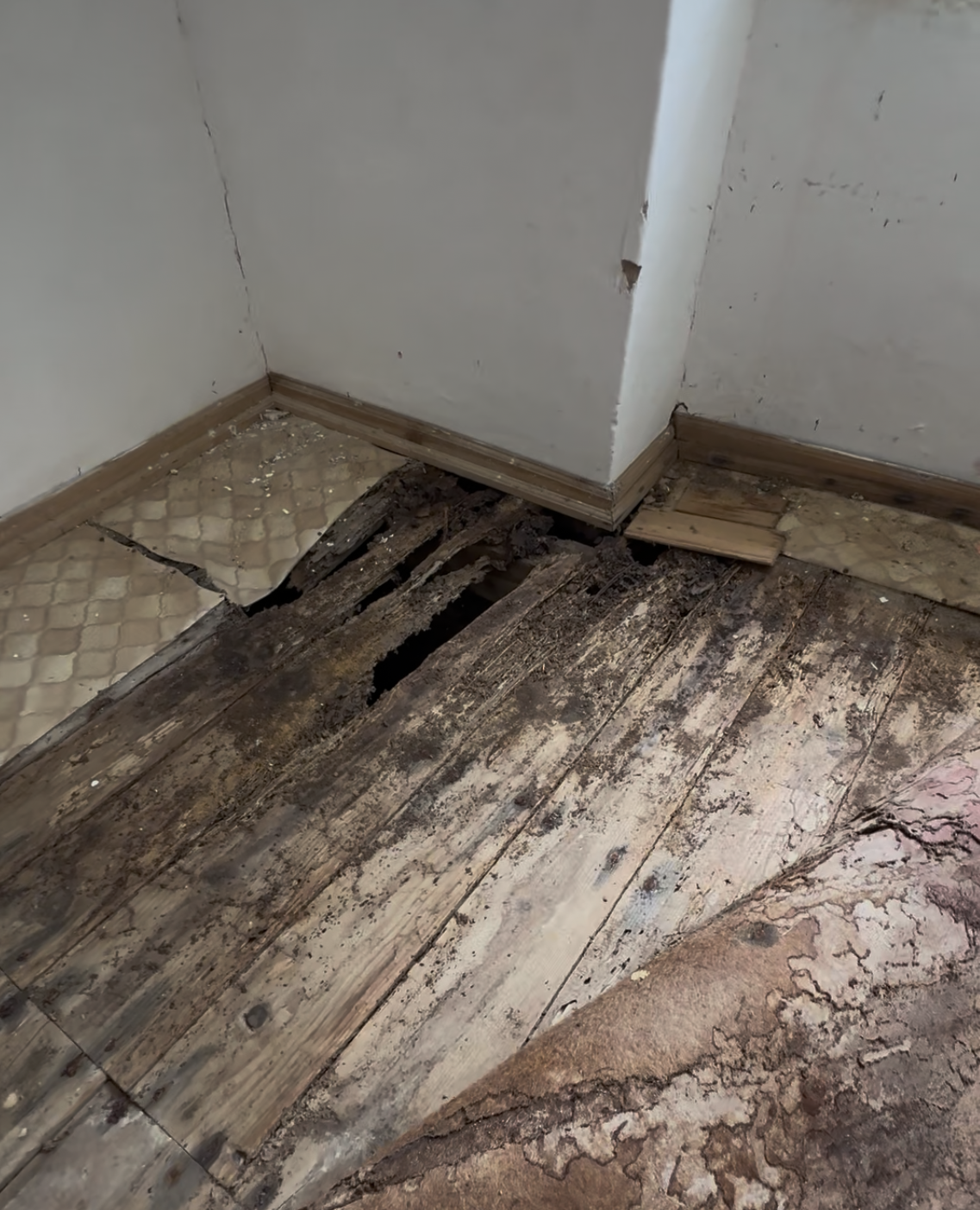
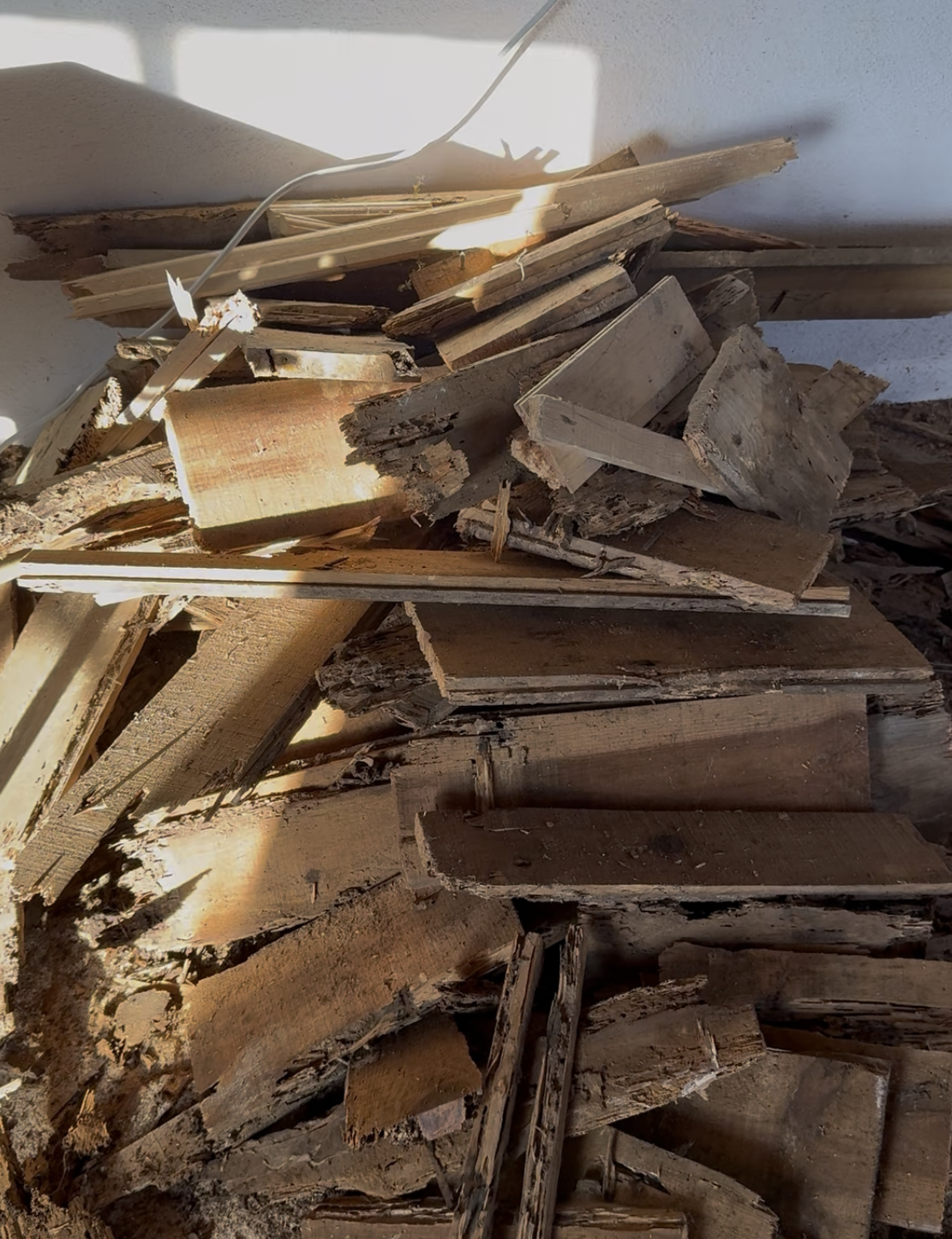
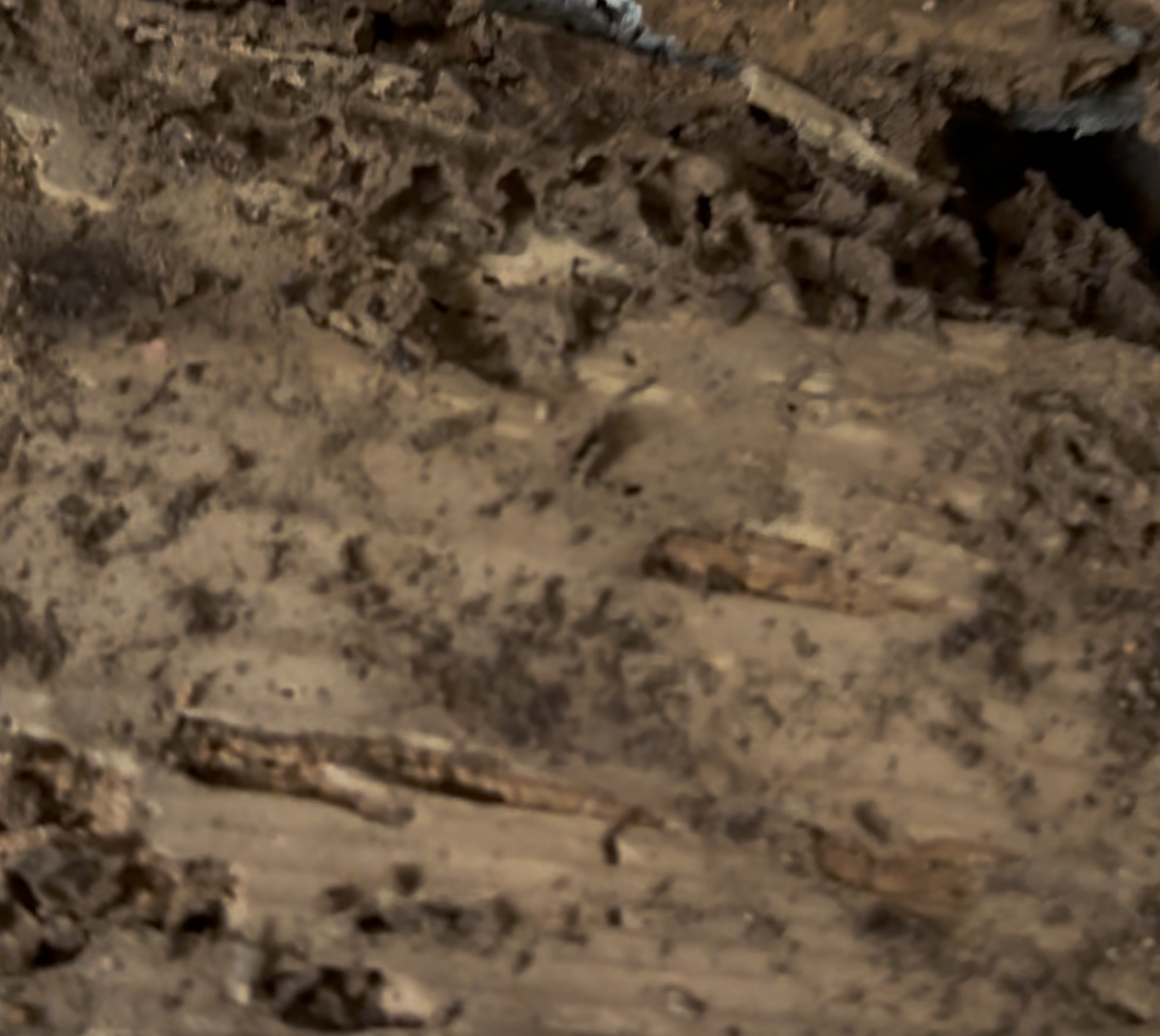
We discovered serious woodworm damage in the village house.
During a Facebook Live I pushed on one of the boards and my hand and leg went straight through it.
41:23 — David:
Fire season is another major consideration
when buying rural property in Portugal.
Fires are a real part of life across parts of southern Europe, and we use fire information services such as Fogos to keep an eye on what's happening.
41:51 — David:
Water is another major part of why we love the area.
We even brought around a hundred litres of our favourite spring water back with us last time.
42:19 — David:
Knowing what we know now,
would we buy the mountain again?
Alison:
Yes.
David:
Yes.
42:37 — David:
We love being there.
When Beyla was younger she once said: "When you're in nature you're free."
She loves finding lizards, snakes, wild boar signs, vultures and everything else around the land.
43:32 — David:
You can definitely get a bargain,
but do some research.
Preferably more than we did.
43:58 — David:
Get to know local builders and tradespeople too.
One thing we've repeatedly heard from local people is that finding somebody who actually turns up can sometimes be part of the challenge.
44:25 — David:
We're still waiting for Fernando to come and repair something
I've already repaired myself.
He still says he's coming. I haven't got the heart to tell him it's done.
44:51 — David:
Would I buy another mountain?
Apparently yes, because there's another one nearby we've already considered.
45:20 — David:
It's owned by several farmers
and has been on the market for years.
We've heard they may accept considerably less than the advertised price.
45:49 — David:
We probably wouldn't buy that particular one now
because it's too steep for what we'd want to do.
What makes it interesting is the water.
46:18 — David:
The spring produces an extraordinary amount of water.
We've filled a fifty-litre container in under a minute there.
46:48 — David:
I'd buy our mountain again.
I'd even buy the village house again,
purple bathroom suite and all.
47:15 — David:
One handy final tip:
if you're looking at an old Portuguese house with wooden floors,
lift the carpet and actually inspect them.
We discovered the hard way what serious woodworm damage looks like.
47:45 — David:
If you've got questions,
send them to us through the website.
Apparently our listener numbers have quadrupled, which isn't difficult when you're starting from almost zero.
48:16 — David:
We briefly argue about whether that's tripled or quadrupled
while Alison continues not speaking loudly enough for the microphone.
48:43 — David:
Alison suggests the next episode should be about crochet
and finding craft supplies in Portugal.
49:11 — David:
The crocheted dinosaur apparently looked suspicious
during the early stages of construction.
49:40 — David:
Thanks for watching.
And we still can't turn the camera off properly.